

Route: Lemosho | Summit: December 25 | Operator: Ultimate Kilimanjaro | Days: 8 | Elevation: 19,341 ft
Some mountains find you before you’re ready for them.
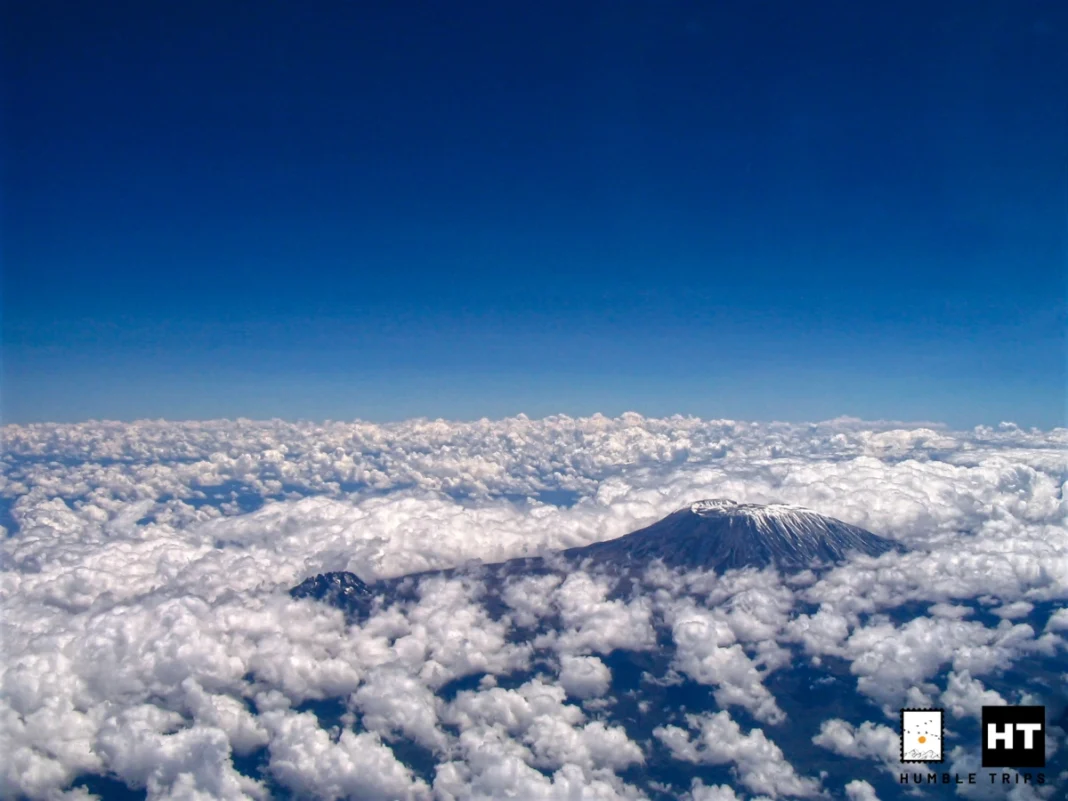
I first saw Kilimanjaro from a car window driving into Ngorongoro Crater. Snow-capped, impossibly tall, rising clean out of the flat East African landscape. I was living in Tanzania at the time — two years that turned out to be among the best of my life — and every time I drove past, every time I flew over it and looked down from the window seat, I had the same thought.
What would it feel like to be up there?
That thought never left. It followed me back to India for my marriage. It came up in conversations with my wife so often that it stopped being a travel idea and became something else — a thing I owed myself. When I mentioned it to a friend who hiked, we didn’t even finish the conversation before we’d both committed to it.
Twenty years after that first drive past Ngorongoro, I stood at the Londorossi Gate and tried to breathe slowly.
This is what happened on the eight days between that gate and the summit.
The fear before the first step
I’ll be honest about Day 1.
I was scared. Not of the mountain specifically — I knew the Lemosho Route wasn’t a technical climb. I was scared of myself. Whether I had what it took. Whether my body would cooperate at altitude. I had driven close to Umling La in Ladakh before, which sits near 19,000 feet, and I remembered what the altitude had felt like just riding in a vehicle — the labored breathing, the way even walking without weight had left me panting. And now I was going to climb to roughly the same height on foot over eight days.
The trust that got me through that first day came from two places: my friend walking beside me, and the guides ahead of us who had done this hundreds of times and treated the mountain like an old familiar road.
We hiked into undisturbed rainforest through drizzle and mud. Colobus monkeys watched us from the canopy. It was beautiful and it was wet and I was quietly terrified. By the time we reached Mti Mkubwa camp, I had made peace with the fact that fear and forward motion are not mutually exclusive.
A different world every day
One of the things nobody tells you about Kilimanjaro before you go: it is not one mountain. It is five or six completely different landscapes stacked on top of each other.
Day 2 out of the rainforest and into savannah — tall grasses, heather, volcanic rock draped in lichen beards. Our first glimpse of Kibo across the Shira Plateau stopped us mid-stride. The scale of what we were walking toward became suddenly real.
Day 3 across the Shira Plateau — one of the highest plateaus on earth — with its moorland meadows and strange silences. One of our strongest team members dropped out that day due to altitude sickness. I remember what our guide said about it: being muscular and strong does not mean it’s easy. The mountain asks for something different — it asks for mental strength and endurance. Watching someone physically fit and determined turn around was its own kind of lesson.
Day 4 brought Lava Tower — a 300-foot volcanic rock formation standing in the mist at around 15,000 feet. We had lunch there. Clouds moved through the gaps in the rock. I remember thinking that this single lunch, in this single place, was worth the entire trip by itself. Then we descended through the Senecio Forest to Barranco Camp — trees so old and enormous that we walked through them feeling genuinely small.
The Barranco Wall — first real test
Day 5 changed something.
I had seen the Barranco Wall from camp the evening before — a nearly vertical 900-foot cliff face. In the cold and light rain, ice had formed thin sheets on the rock. From below, the climbers already on it looked like tiny dots. I remember standing there thinking: we are going to do that.
We did.
The climb up the wall is non-technical — no ropes, no equipment — but it is steep and exposed and demands full attention. There is one section called the Kissing Rock where you press your body flat against the cliff face and edge along a narrow ledge. When you reach the top and turn around, the plateau opens up beneath you and the scale of where you are hits differently than it does from the trail. That was my first genuine wow moment on the mountain — not the summit, not the sunrise, but the top of the Barranco Wall with the world dropping away below.
From there we crossed a series of hills and valleys, descended sharply into Karanga Valley, and climbed back up to Karanga Camp. One of those days where the mountain asks more than you expected and you give it anyway.
Day 6 — the helicopter
Barafu Camp is base camp for the summit. The day you arrive there is a strange mix of doubt, fear, and excitement. The team was encouraging throughout — the kind of group dynamic where strangers stop being strangers by Day 4 and something else takes over.
Then the loud noise came.
We heard it and came out of the tents to look. In the valley far below, a medical evacuation helicopter had gone down. Smoke and flames. People were running toward it from the lower camps. We stood there watching, not knowing what to say.
Later, on the descent, we were told everyone on board had been lost.
I had World Nomads Explorer insurance with evacuation coverage above 6,000 meters. I remember sitting in the tent afterward and thinking: not needing that is the best possible outcome. Getting down in one piece, in good health, is the actual goal. The summit matters. Getting home matters more.
We slept early. Summit push was scheduled for midnight.
Summit night
I am going to try to describe this accurately, which is harder than it sounds because what happened between midnight and sunrise on December 25 exists in my memory as a series of fragments rather than a continuous story.
Darkness. Cold that found your fingers first, then your face. The headlamps of the climbers ahead of us forming a broken chain of light going upward into nothing. Our own headlamps throwing small circles on the rock and ice in front of our boots. Hours of this.
Short breaks every 45 minutes or so. The guides making sure we put our jackets back on every time we stopped — if you cool down too fast at that altitude the cold goes into you in a different way. The porters singing through the dark. Not loud, not performative — just there, steady, moving with us.
Between 3am and 5am is where it gets hard. Not just physically — the sleepiness hits you in waves on top of everything else, which nobody quite prepares you for. Your body wants to stop and your guides won’t let it and somehow that negotiation between the two is what gets you up the mountain.
Then, near Stella Point at 18,900 feet, something happened that I was not prepared for.
The sun came up over Mawenzi Peak.
I don’t have adequate words for this. The air was thin enough that breathing required conscious thought. My mind had been cycling through music for hours — Toto’s Africa had been stuck in my head since sometime around 2am, then the Lion King soundtrack, then back to Toto — and when that light started coming over Mawenzi I stopped walking for a moment and just watched it.
One of the guides came alongside me. You have done the hard part, he said. One more hour along the ridge and you are there. The rest is easy.
He was right.
The crater appeared. Snow formations — tall standing sheets of ice — that look nothing like anything on the lower mountain. The kind of landscape that takes a moment to register as real. We scrambled up the last section and then we were at the sign.
Uhuru Peak. 5,895m. Africa’s Highest Point.
I had been carrying this dream for twenty years. I stood there and eyes filled up. I recorded a video and sent it to my wife and my kid. Then there was a strange quietness — not emptiness in a sad way, but the specific feeling of having completed something that had lived in you for a long time. A good kind of blank.
We took photos. We hugged each other. Someone tapped me on the shoulder and I turned around to find a climber in a full Santa Claus outfit grinning at me.
It was Christmas Day.
We stayed at the summit as long as the cold allowed. Then we turned around and started down.
The descent — harder than going up
The descent is where Kilimanjaro extracts its final payment.
From Uhuru Peak to Mweka Camp in one push. We slid through scree — loose volcanic gravel where finding grip is genuinely difficult — and both my friend and I went down at separate points, fortunately without injury. Then the trail turned rocky, the kind of long sustained rocky descent that compresses into your knees with every step for miles.
My friend’s toes took the worst of it — blisters and blood clots from the constant forward pressure inside the boot. We slowed down after lunch at Barafu and decided that the time did not matter. What mattered was arriving intact.
I was last in the group. My friend and one of the porters walked with me — not pushing, not waiting impatiently, just keeping pace through extraordinary landscape. There are sections of the descent where the trail runs through what looks like a dried river bed. The scale of the volcanic geology around you is something you miss on the way up because you’re focused on altitude and pace. On the way down, walking slowly with people you trust, you start to actually see it.
At some point the pain in my knees moved past physical and became something I was managing mentally instead. Each step a negotiation. The guide on my right, my friend on my left, both steady and unhurried.
We made Mweka Camp in the late afternoon.
The part I’ll remember longest
That evening at Mweka Camp, the porters gathered us together.
I did not expect this. I knew there would be a tipping ceremony and I had prepared for that. What I did not expect was what happened before it — the songs, the stories, the jokes, the way each of us was asked to say a few words and genuinely meant every one of them.
These are people who wake before us, carry loads we could not manage, cook food at altitude that somehow tastes remarkable, set up tents in wind and cold and rain, sing at 3am in the dark to keep strangers moving upward, and do all of it with a quality of presence and warmth that I have not often encountered anywhere.
By that last evening they were not strangers and they were not service staff. They were something closer to family — the particular kind you make quickly in difficult places.
The summit was the goal. That gathering was the gift.
Day 8 — coming down
The last day is a walk through forest to Mweka Gate to collect the summit certificates. Wet and muddy at lower elevations. I was the slow one and my friends walked with me anyway, knowing we were trying to stretch the time out.
At the gate, porters who had already finished were waiting. One came and started brushing the dust off my boots. I politely declined — it felt like too much. He smiled and did it anyway for a second before stopping.
On the bus to the hotel we stopped for lunch, had drinks, told jokes, went through the souvenir shops. Moshi in the afternoon, carrying small pieces of Tanzania home.
Route overview — Lemosho, 8 days
For anyone planning their own climb, here is the day-by-day breakdown with what to expect from each zone:
| Day | Route | Dist. | Altitude | Terrain & what to expect |
|---|---|---|---|---|
| 1 | Londorossi Gate → Mti Mkubwa | ~5 mi | 9,498 ft | Rainforest zone. Dense, undisturbed forest canopy. Colobus monkeys in the trees. Muddy trail with drizzle likely. Cool and humid — very different from what comes above. Enjoy the green while it lasts. |
| 2 | Mti Mkubwa → Shira 1 Camp | ~5 mi | 11,500 ft | Moorland zone. Trail climbs out of the forest into open savannah — tall grasses, heather, volcanic rock draped in lichen. Big sky. First views of Kibo across the Shira Plateau. The scale of the mountain becomes real here. |
| 3 | Shira 1 → Moir Hut | ~5 mi | 13,999 ft | Shira Plateau — one of the highest plateaus on earth. Moorland meadows, strange silences, wide open terrain. Acclimatization day with optional walks on the Lent Hills. Altitude starts being felt here — this is where fitness alone stops being enough. |
| 4 | Moir Hut → Lava Tower → Barranco Camp | ~7 mi | 13,044 ft | Alpine desert begins. Lava Tower at 15,000 ft — a 300-foot volcanic rock formation in the mist. Lunch here if weather allows. Then down through the extraordinary Senecio Forest — giant groundsel trees that look prehistoric and dwarf you completely. Classic acclimatization profile: climb high, sleep low. |
| 5 | Barranco Camp → Karanga Camp | ~4 mi | 13,106 ft | The Barranco Wall. Nearly 900 ft of steep, non-technical climbing — the most dramatic single section of the route. Ice on the rock in cold weather. The Kissing Rock section requires pressing flat against the cliff. Views from the top are the first real wow moment. After the wall: hills, valleys, and a sharp descent into Karanga Valley before climbing back up. |
| 6 | Karanga Camp → Barafu Camp | ~4 mi | 15,331 ft | Alpine desert — sparse, stark, exposed. Barafu is base camp. Rocky terrain, thin air, little vegetation. The reality of the environment becomes clear here — this is where medic evacuations happen and where the mountain shows what it is. Sleep early. Summit push starts at midnight. |
| 7 | Barafu → Uhuru Peak → Mweka Camp | ~9 mi | 19,341 ft summit / 10,065 ft camp | Summit zone then scree descent. Hours in darkness to Stella Point. Sunrise over Mawenzi. The crater and its standing ice formations. Uhuru Peak. Then the long descent through loose scree and rocky trail — knee-crushing, demanding, beautiful. Mweka Camp in the upper forest zone. |
| 8 | Mweka Camp → Mweka Gate | ~6 mi | 5,380 ft | Back through the forest. Wet and muddy at lower elevation. The mountain lets you go slowly. Certificates at Mweka Gate. The last walk together before the bus back to Moshi. |
Operator: Ultimate Kilimanjaro — guides, porters, food, camping equipment, park fees included. Recommended without hesitation.
Insurance: World Nomads Explorer with evacuation coverage above 6,000m. Non-negotiable given what we witnessed on Day 6.
Best season: Lemosho in December means rain for the first several days and cold throughout. The drier windows are January–March and June–October. Factor that into your planning.
Before you go
The gear post covers everything I wore, carried, and wish I’d brought — including what didn’t work and what I’d change. Start there before you start shopping: [link to Kilimanjaro gear post]
If you have questions about the climb, the operator, the route, or anything else — leave them in the comments. I’ll answer everything I can.
And if you’re standing somewhere right now looking at a mountain and wondering what it would feel like to be on top of it — trust that feeling. It knows something.